On his series, "Seascapes", he writes,
One New York night in 1980, during another of my internal question-and-answer sessions, I asked myself, "Can someone today view a scene just as primitive man might have?" The images that came to mind were of Mount Fuji and the Nachi Waterfall in ages past. A hundred thousand or a million years ago would Mount Fuji have looked so very different than it does today? I pictured two great mountains; one, today's Mount Fuji, and the other, Mount Hakone in the days before its summit collapsed, creating the Ashinoko crater lake. When hiking up from the foothills of Hakone, one would see a second freestanding peak as tall as Mount Fuji. Two rivals in height—what a magnificent sight that must have been! Unfortunately, the topography has changed. Although the land is forever changing its form, the sea, I thought, is immutable. Thus began my travels back through time to the ancient seas of the world.

Caribbean Sea, Jamaica 1980
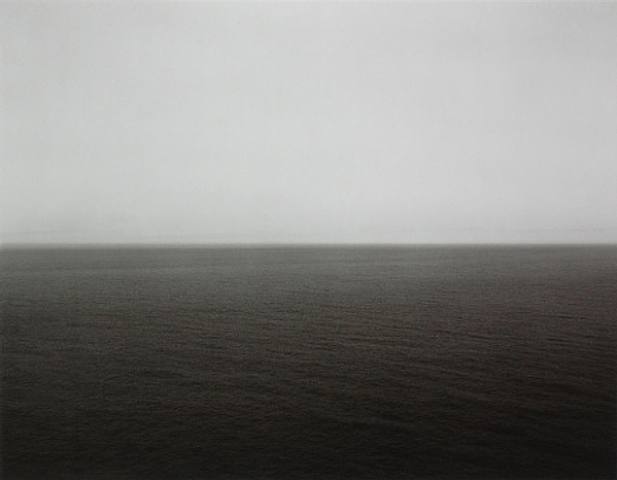
Lake Superior, Cascade River 1995

Atlantic Ocean, Newfoundland, 1985
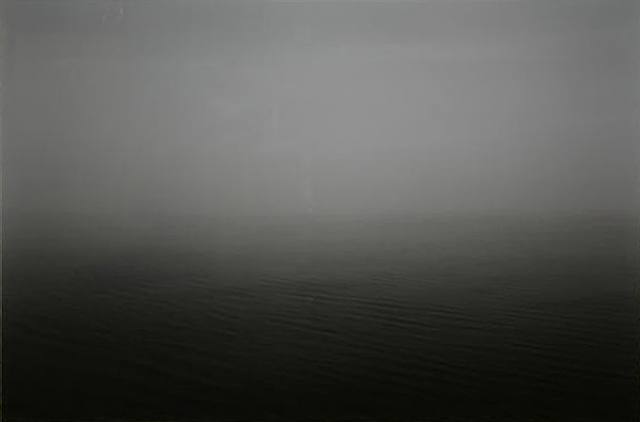
Black Sea, Ozuluce, 1991
For his series "Portraits," Sugimoto writes-
In the sixteenth century Hans Holbein the Younger (1497-1543), Flemish court painter to the British Crown, painted several imposing and regal portraits of Henry VIII. Based on these portraits the highly skilled artisans of Madame Tussauds wax museum re-created an absolutely faithful likeness of the king. Using my own studies of the Renaissance lighting by which the artist might have painted, I remade the royal portrait, substituting photography for painting. If this photograph now appears lifelike to you, perhaps you should reconsider what it means to be alive here and now.
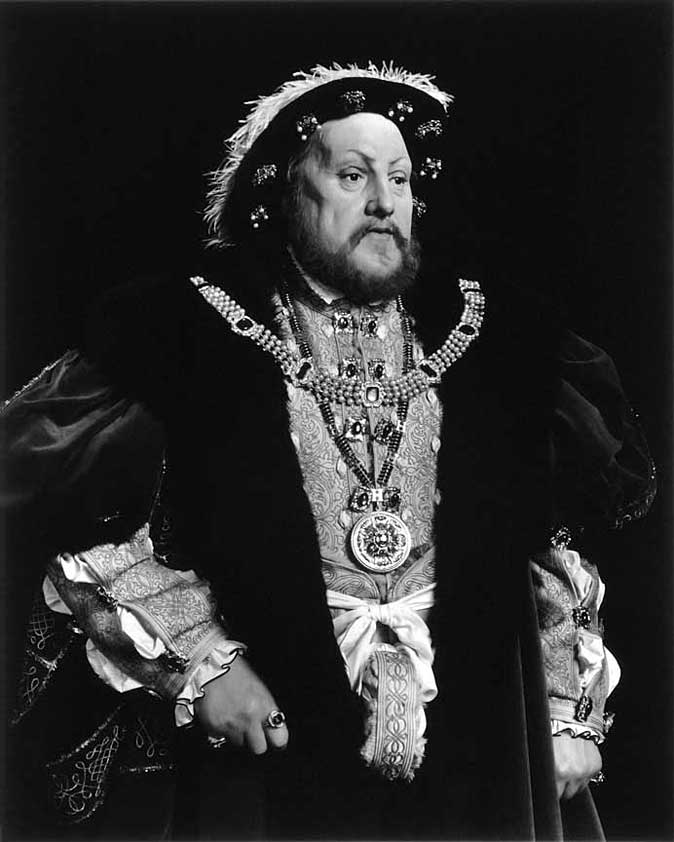
Henry VIII 1999
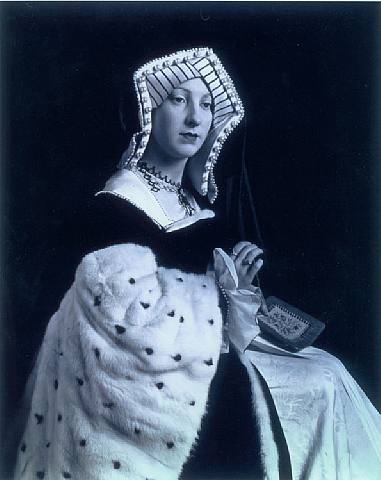
Catherine of Aragon, 1999
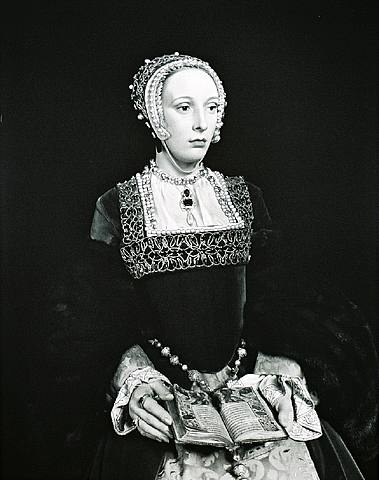
Catherine Howard, 1999
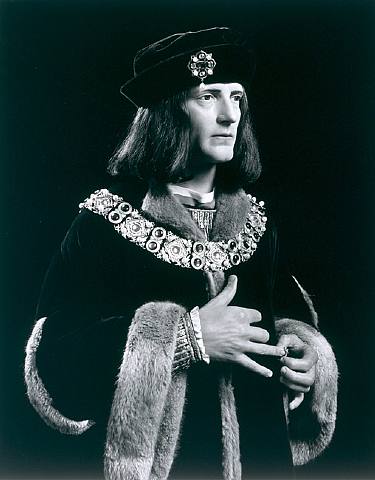
7. Richard III, 1999
Questions-
- Even though these two bodies of work are very different, can you articulate any way of describing the similarities that Sugimoto takes to these projects?
- Can you use Sugimoto's work as an example of how Cotton describes (below, first post on chapter 3) the "emotional detachment" of the deadpan aesthetic? Do you think these photographs are emotional?
- How could you compare the "portrait" series by Sugimoto to the work of Thomas Demand, from the previous chapter?

5 comments:
These images are absolutly emotional. I mean that especially for the ocean series. But I don't grasp that idea of ancient man looking upon this subject. I can understand how this might have inspired Sogimoto, but do get this feeling of vastness of the unknown, and fear which may have been the raction which primitive man experienced. The second series are interesting because I don't look at them as real photographs of royalty and beleive them to be real but I think their very niced portraits of actors.
In my opinion, even though the two works by Sugimoto are very different from each other, I can see one or two similaties or connections between them. Both projects imply attention to a single subject fro instance, the sea photographs, the sea is the center of and focus of it, and on the portraits, the person is the main focus, so there is no other subject like a background or a boat. As a result, the viewer puts all the attention on the sea and the figure who was being photographed. Another similarity is the constant change on nature and people which both works show as well. Finally, to me the connection between the sea and the people from that time can be another similarity. At that time people had only the sea to travel to far places.
In my opinion, even though the two works by Sugimoto are very different from each other, I can see one or two similarities or connections between them. Both projects imply attention to a single subject for instance, the sea photographs the main subject is the sea, and on the portraits, the person is the focus, so there is no other subject like a background or a boat. As a result, the viewer puts all the attention on the sea and the figure who was being photographed. Another similarity is the constant change on nature and people which both works show as well. Finally, to me the connection between the sea and the people from that time can be another similarity. At that time people had only the sea to travel to far places.
First off, I think Sugimoto's internal dialouge is insane, and I love it. It seems that Sugimoto has a fixation on vacantness. The vacantness of a calm body of water to the empty eyes of a oil painting masterwork from another century. It's this vacantness that puts him in the category of deadpan. In regards to Demand, it's the same kind of intricacies to setting up their shots that i find to the a link between the two.
How could you compare the "portrait" series by Sugimoto to the work of Thomas Demand, from the previous chapter?
Instead of photographing the actual thing they are photographing a like-ness, some of these places that Demand photos are not around anymore before he re-constructs them. The people that Sugimoto photos are definately not around anymore. Both artists' photos without backstory can make you question if this item/person was actually there, until further investigation.
Post a Comment