One such artist is Yinka Shonibare, an artist born in Nigeria who lives and works in London. His series "Diary of a Victorian Dandy" features himself as the lead character of a series of images meant to show scenes of life in 19th century upper-class Britain, and they are loosely based on a series of etchings by Thomas Hogarth entitled "The Rake's Progress."
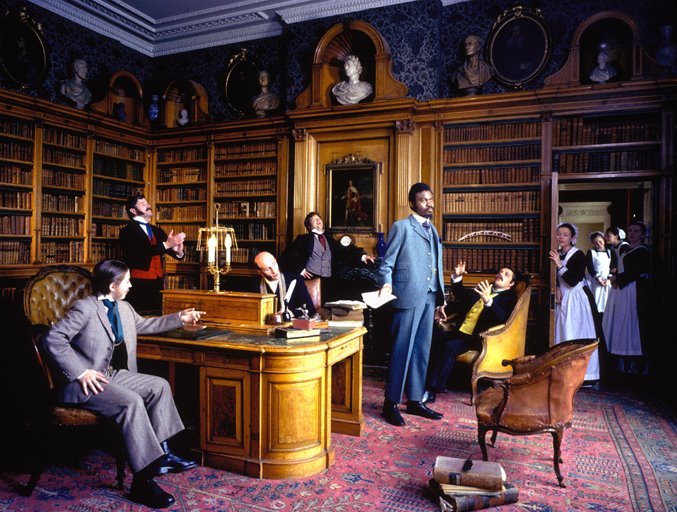 "Dairy of a Victorian Dandy, 14.00"
The titles of Yonibare's photographs indicate the time of day they are meant to "illustrate."
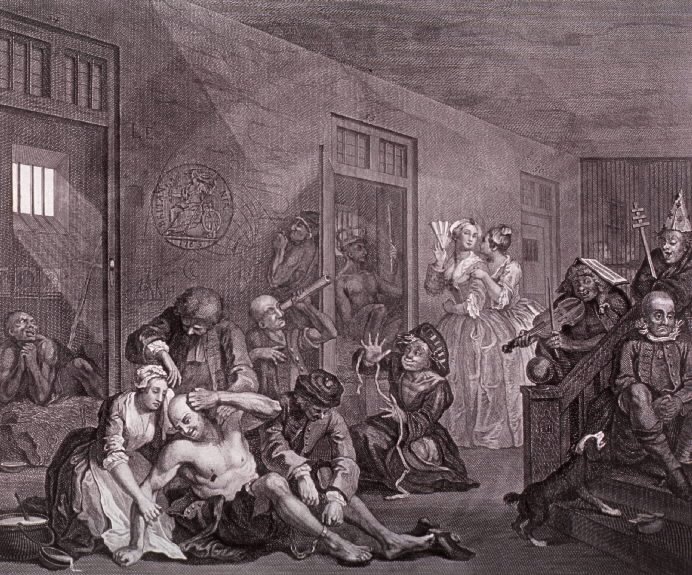 William Hogarth, "The Rake's Progress, Plate 8", 1735
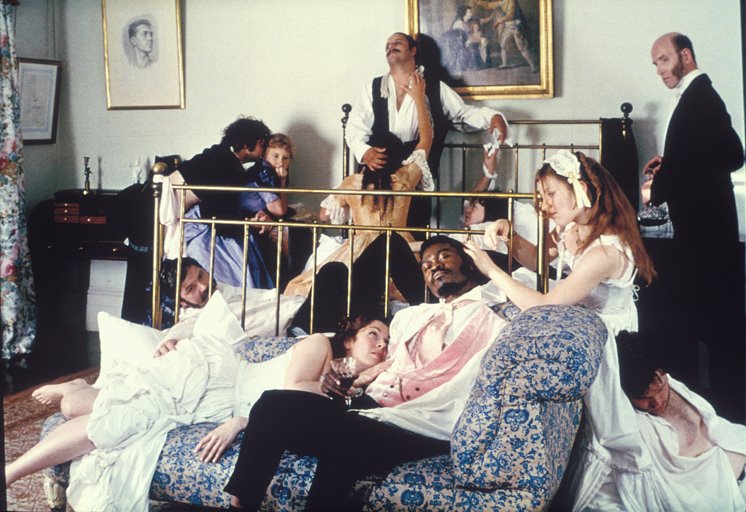 "Dairy of a Victorian Dandy, 3.00"
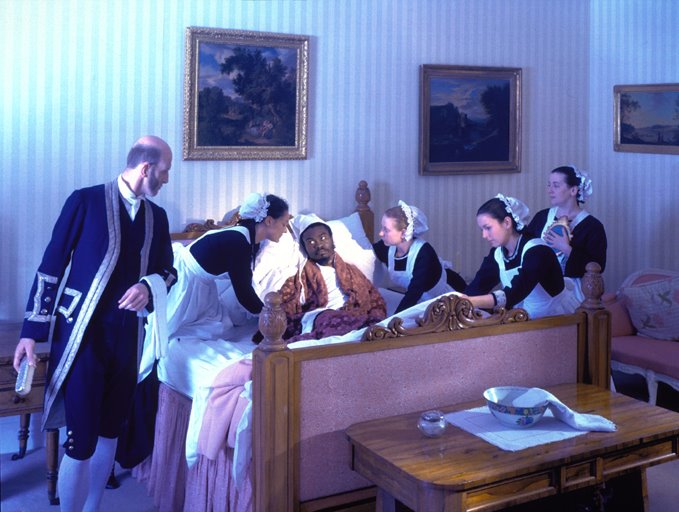 "Dairy of a Victorian Dandy, 11.00"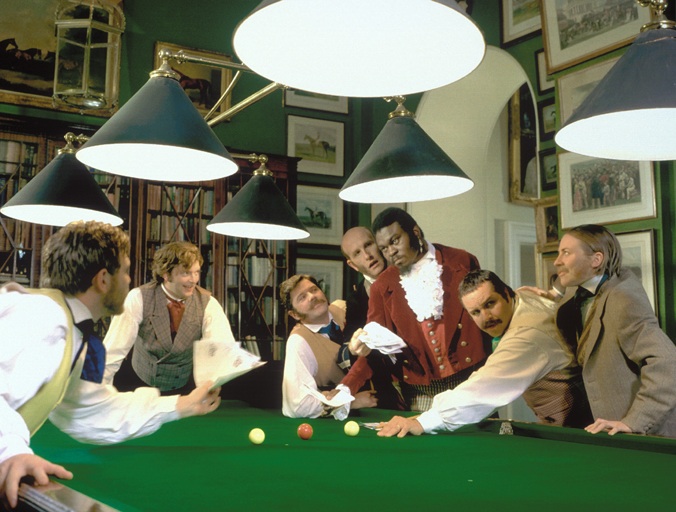
"Dairy of a Victorian Dandy, 17.00"
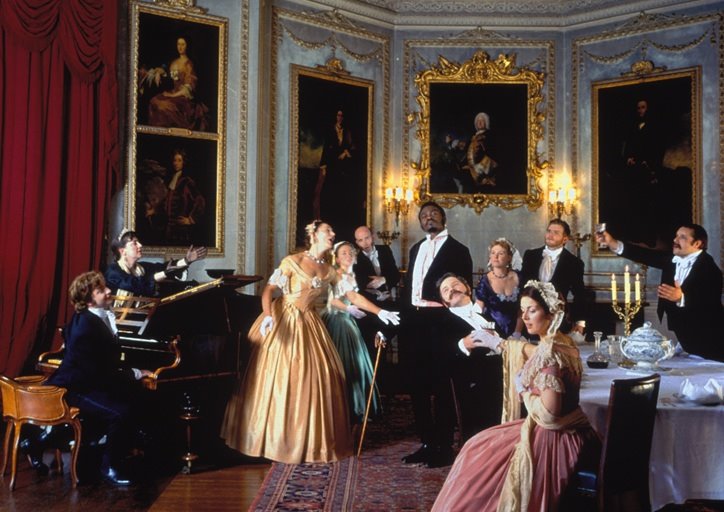 "Dairy of a Victorian Dandy, 21.00"
"Diary of a Victorian Dandy" was a collision of performance and photography reflecting the nation's popular taste for the period costume drama and nostalgia for a utopian past at the heart of 'little' England. The production was shot on location over a period of three days in the opulent and sumptuous environment of a stately home in Hertfordshire. The artist Yinka Shonibare is the central character of the dandy and orchestrates an ensemble of professional actors, a make-up artist, a stylist, a photographer and a director. Behind the superficiality and self-satisfaction of Shonibare's Dandy lies a deeper social resonance. The work is a powerful parody of the artist's own life as a creative black British man living with a physical disability in contemporary Britain. He alludes to a black aspirational designer generation, the contradictory social codes implied in the conspicuous sartorial elegance of figures such as Chris Eubank and the keeping-up-appearances mentality of the contemporary British 'dude' scene.
The artist's imposing physical presence--he is the largest man and the only black man present in the photographs--underscores his role as the central character in each tableau. Whether he plays the rogue/hustler/provocateur, as in the billiard-room scene, Diary of a Victorian Dandy (17:00 hours), or the celebrated social lion, as in Diary of a Victorian Dandy (21:00 hours), Shonibare draws attention to the political, racial and sexual tensions that underlie these sumptuously constituted visual fictions. The episodes are based on any number of British genre paintings as well as on Hogarth's The Rake's Progress. Yet they convey Shonibare's own agonistic fantasies about private and institutional power. The images imply that although the artist may assume the role of Insider Hero or glamorous Man of Mystery, he is destined, because of race, to remain perpetually Other, even in his own imaginings.

4 comments:
I love these the most! Wow, amazing organization. The images are so full it seems like you could just keep looking at them forever. And although I appreciate their serious undertones, they do kind of remind me of the Tanqueray (sp?) commercials on TV (with Tony Sinclair). Maybe this is where the commercial got its inspiration??? Anyway, I really love the lighting in Dairy of Victorian Dandy, 11.00. I thought that was a clever way to maintain his importance even though he is no longer the largest person in the room.
I like Yinka Sonibar the most out of the three photographers posted here, as far as content, lighting and just the substance of his work. There's so much going on and so much to look at in each picture. I also like that they each look like a freeze-frame scene of a movie. They must have taken a lot of time and preparation, costumes, set and so forth. I like "Diary of a Victorian Dandy 21.00" the most. I love that he included the lights over the pool table in the frame. (I've never seen so many lights over a pool table!)
Photography is a continuation of art history! Why make photography to stress that point because it's already implied in it's exhistance. I think this entire project is rediculous and irrelevent. Photography has been an established artform for over 100 years so it's naturally going to tell a story, in a historical sence, about the phothographer, the movements, the subjects ect...
I think that the series is effective on a multitude of levels. as a reproduction of art from a earlier time i think that the time and craft that went into each print is just insane, for so many people to come together and nail a photographer's concept is great. The idea of a sketch turning into a photo is to me a commentary on the changing technologies of our society. Why sketch what is going on when you can get your camera out?
Post a Comment