Art in America, June 2005 by Pepe Karmel
A few years ago, my son and I took the shuttle bus from Orlando to Disneyworld. As we drove through the flat Florida landscape, I noticed that the woman sitting next to me was wearing the ID tag of a Disney employee. She was from southern Germany, it turned out, and worked in the Bavarian beer garden at Epcot Center. Wasn't it strange, I asked her, to work in a replica of the place she came from? "The town I grew up in was bombed during the war, and then rebuilt to look exactly the same as it did before," she said. "So it isn't really that different."
Like the German pavilion at Epcot Center, Thomas Demand's photographs offer a cleaner, heater version of the real world. At first glance, they appear to be straightforward records of unremarkable locations: offices, auditoriums, hallways, kitchens, bathrooms, staircases, stadiums and gardens, the familiar sites of mass society. It seems mildly perverse to give modest documents such heroic presentation: enlarged to mural scale and laminated to gleaming sheets of Plexiglas. And there is something off about the scenes in Demand's photographs. They record the traces of human activity, but no people appear in them. The surfaces are too smooth, the edges too sharp. Sometimes things are damaged, but they never betray the wear-and-tear of daily life. To walk through the retrospective of Demand's (mostly very large) photographs (1993-2004) at the Museum of Modern Art was to enter an unsettling alternate universe.
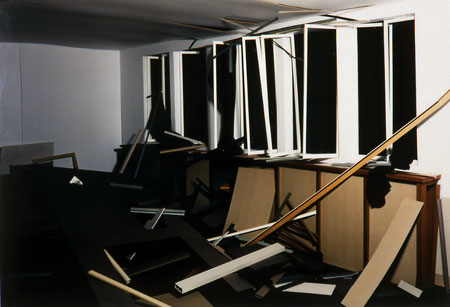
Like Epcot Center, everything in Demand's work is a fake, a meticulously constructed replica in paper and cardboard. Unlike Epcot Center, Demand's pictures often lead the viewer into a troubling confrontation with history, both German and international. A 1994 photograph with the anodyne title Room shows a conference room in a shambles: table collapsed, windows askew, moldings tumbled to the floor, chairs overturned. This is Demand's re-creation of the military conference room where Count Stauffenberg attempted to assassinate Adolf Hitler on July 20, 1944. Four people were killed and the room was demolished, but Hitler survived.
Room, 1994
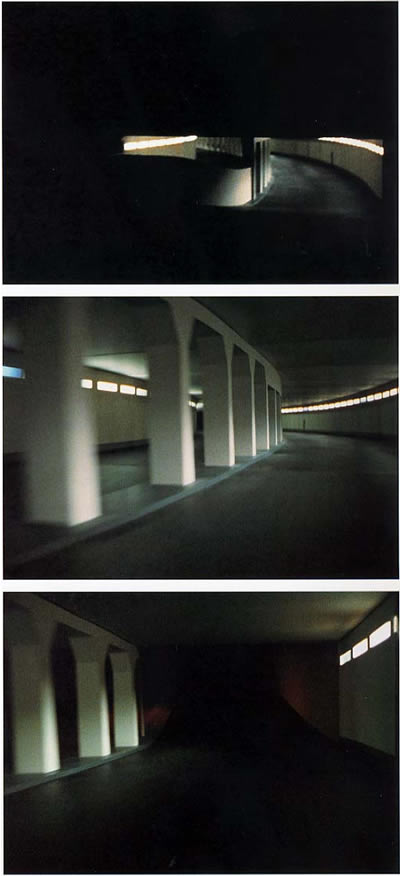
"Tunnel"- stills from a video, a recreation of the scene of Princess Diana's death
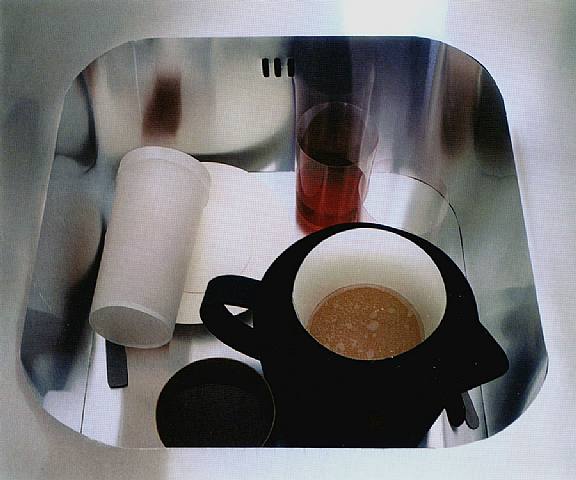
Sink, 1997
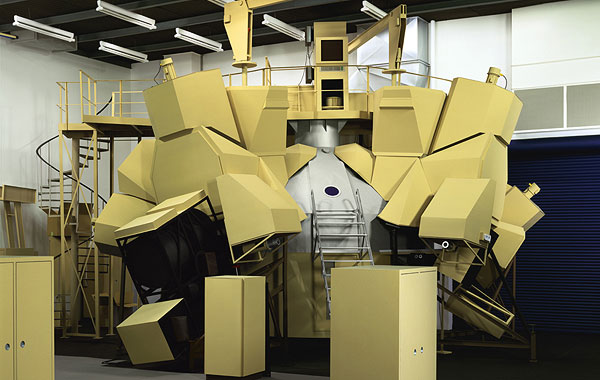
Space Simulator, 2003
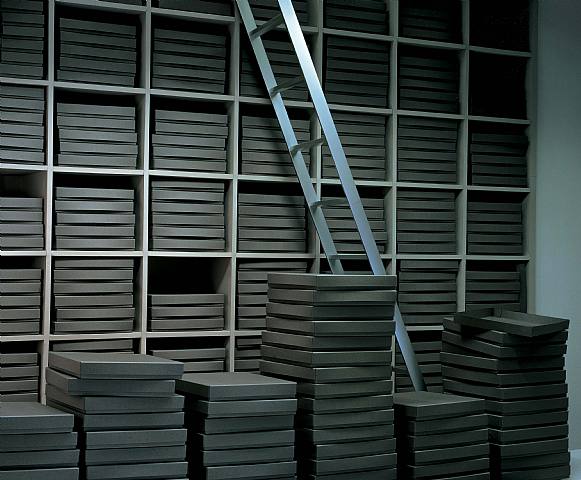
Archive, 1995
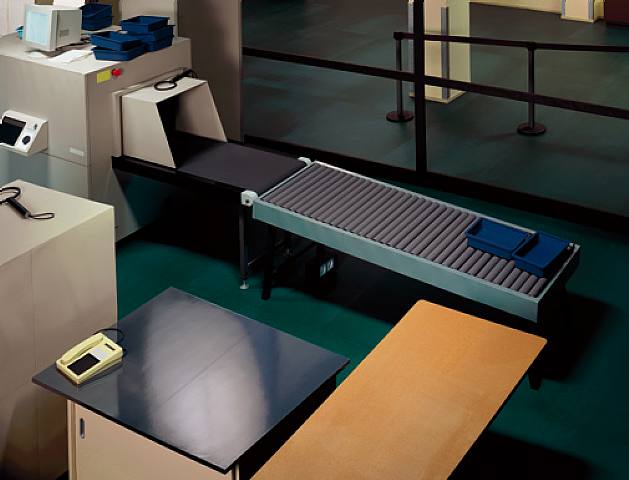
Gate, 2004

7 comments:
To me these pictures were not interesting until I knew the story behind them. I feel very blah about the photos themselves but I admire the meticulous planning that must have gone into it all.
Thomas Demand photos probably have different approaches on people. The images do not have that beauty or emotion that connect the viewer to the photo right away. However, they have this interesting geometric pattern, all this repetition going on, and the story behind it. As a result,to me they become interesting in a way. I guess I really would like to see them on black and white, I think they would look better through my eyes, but if they artist chose colors it must be for a reason.
I also agree that these photos may have caught my eye better being in black and white. These photos I can not relate too, physically or emotionally, they don't tug at my heart strings. They do have good stories behind them though.
I can see how these images make good photographs, but they do not appeal to me at all. They are very sterile, emotionless, staged. I do appreciate the amount of time that went into the setup, but it's very boring to me. I would never hang something like this up in my house or even make an effort to see it in a gallery. I think if I could see something human in them, I would be more interested.
The absence of people implies that there exhisted this "perfect" world and something went wrong. That's a comforting thought. Almost to see the destruction of what was never possible in the first place.Oh but we do try don't we.
I think it's the sterility of these photos that really make them special.If inside a gallery I were to see these blown up and mounted, it would smack of irony. The expected sort of piece ina gallery would be full of emotion and life, but this is quite the opposite. Does that not make it art? Or does that make it art in that we think about the way we expect art to be? The alignments are great, and take on a geometric quality as priscila has already mentioned.
It seems as though he put a whole lot of effort into constructing these geometric scenes for not such interesting photographs. He kind of wasted his time if the purpose was to create great pictures.
Post a Comment